


Not Then, Not Now: Reflections on Cable Street 1936
Guest
Marking the 90th anniversary of the Battle of Cable Street - when Londoners halted a fascist march through the Jewish East End - we're honoured to share a guest blog by Unite for a Workers' Economy organiser Michael Agboh-Davison. Here, Michael reflects on a year of anti-fascist anniversaries and their connections to current threats locally and further afield:
2026 sees two major anniversaries in working class history. In May, Unite the union - working with the National Union of Mineworkers and Durham Miners’ Association - commemorated the centenary of the General Strike which brought the country to a standstill for nine days in 2026, in defence of miners’ pay. We situated our national anniversary events in Barnsley, at the headquarters of the NUM. We held a march and rally, talks by historians, and published a book (paper copy available via Rough Trade Books) and a newspaper.
Five days after our General Strike events, Barnsley’s local elections saw Labour councillors swept aside and replaced with a Reform majority, a pattern repeated across the post-industrial north. A populist right movement headed by the wealthy elite, drawing in working class members with a vision of easy answers to economic problems, scapegoating minorities, with opaque overseas funding and a determination to crush the organised labour movement… that could be a story from 2026, or from much earlier.
In March 1936, George Orwell visited a British Union of Fascists (BUF) meeting in Barnsley to watch Mosley speak. He was impressed by Mosley’s oratory skills but scathing about his message (“the usual claptrap”). While Reform is certainly not the BUF, there is a disturbing resurgence of the overtly fascist right prospering from the rightward shift of the Overton window that Reform has facilitated. When we see columns of black-clad men enacting paramilitary cosplay in the streets of Glasgow, it is impossible not to see the 1930s.
This brings us to the second major anniversary this year, the 90th anniversary of the Battle of Cable Street on Sunday 4 October. Again, Unite will be marking this anniversary with a gig, a huge march, a newspaperand another book written by trade unionists (Not Then, Not Now: Reflections on Cable Street 1936, forthcoming). Read more about our anniversary events and sign up for updates.
The events at Cable Street are part of working class folklore. Mosley’s attempt to stage a provocative march through the Jewish East End, facilitated by a massive police presence, was halted by hundreds of thousands of ordinary Londoners – Jews and Irish, communists and trade unionists, old and young. But Cable Street was really the huge crescendo at the end of a year of antifascist resistance, where Mosley’s Blackshirts were opposed up and down the country.
Our forthcoming book includes accounts from Hull and from Tonypandy, where the working class chased the fascists out of their communities. In Leeds where I live, Mosley’s attempt at an outdoor rally on Holbeck Moor a week before Cable Street saw a crowd of thousands welcome him with a shower of rocks. Likewise in Oxford, in Manchester and in countless other towns and cities.
On Friday 15 May, Mosley spoke at Usher Hall in Edinburgh. He had spoken in the same hall in June 1934, with a crowd of 6,000 protestors outside, so there was trepidation about a repeat. This time 1,000 antifascists met in the Usher Hall the previous night, and 15,000 people signed a petition demanding – unsuccessfully – that the rally was cancelled. When Blackshirt stewards, some of whom had travelled from as far as Manchester, began beating up hecklers, antifascists in the audience retaliated, leading to chaos in the hall and several arrests. A huge counter-demonstration outside lasted longer than the fascist rally itself.
For us, remembering Cable Street is not just about remembering one iconic event in London. It is about honouring the efforts made by countless thousands of ordinary workers all over the country to resist the fascist threat that would soon lead to war. The lessons for us in 2026 are as plain as day.
Michael Agboh-Davison is an organiser at Unite for a Workers’ Economy
Some antifascist book recommendations
Out of the Ghetto by Joe Jacobs (Phoenix Press, 1991) - this is currently out of print but can be found second-hand
This autobiography of Communist Party organiser Jacobs takes in the 1930s fight against fascism, focussing on the detail of organising in East London communities and the events around Cable Street. Writing about historic antifascism often focusses on the big rowdy public rallies and counter-protests, and this is a rare insight into the deep political work behind that.
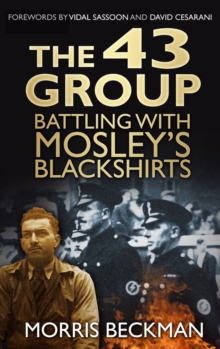
·The 43 Group: Battling with Mosley’s Blackshirts by Morris Beckman (2nd ed., The History Press, 2013)
Jewish ex-serviceman returning to London after the war found Mosley’s Blackshirts regrouping and attempting to revive their movement. The formed the 43 Group to stop this, and they succeeded. This first hand account by founding member Beckman inspired a new generation of antifascists after it was first published in 1992 and is so full of suspense and bravado that its hard to understand why nobody has made it into a film. 10/10 classic.
We Fight Fascists: The 43 Group and their Forgotten Battle for Post-war Britain by Daniel Sonabend (Verso, 2019)
Sonabend’s book is an indispensable companion to Beckman’s and fills in the wider historical context around the 43 Group. Read them back-to-back for maximum impact.
Below you'll find the books recommended by Michael, alongside a list of some of our top recommendations on the history of anti-fascist organising, struggle and thinking.
Linked Books
- title
- The 43 Group : Battling with Mosley's Blackshirts
- author
- Morris Beckman

- title
- We Fight Fascists : The 43 Group and Their Forgotten Battle for Post-war Britain
- author
- Sonabend, Daniel

- title
- Physical resistance. A Hundred years of anti-fascism
- author
- Hann, Dave
- title
- Bearing Witness : Prison Stories from a Woman's Fight Against Fascism
- author
- Mercedes Nunez Targa
- title
- The Black Antifascist Tradition : Fighting Back From Anti-Lynching to Abolition
- author
- Hope, Jeanelle K., Mullen, Bill V.
- title
- Erasing History
- author
- Stanley, Jason
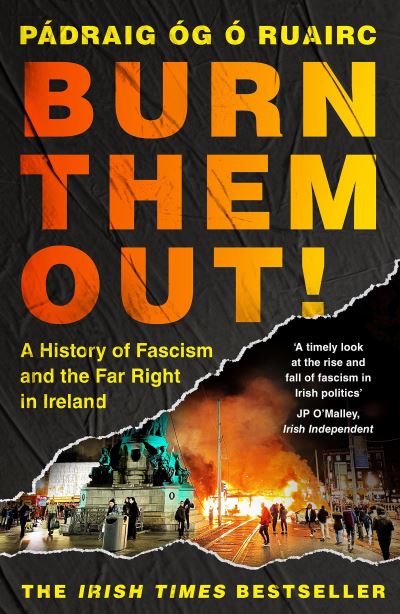
- title
- Burn Them Out!
- author
- Ruairc, Pádraig Óg, Ó
- title
- Antifa : The Anti-Fascist Handbook
- author
- Bray, Mark
- title
- Prequel : An American fight against fascism
- author
- Maddow, Rachel
- title
- Learning from the Enemy : An Intellectual History of Antifascism in Interwar Europe
- author
- Bresciani, Marco

- title
- People's History of the Anti Nazi League: 1977-1981
- author
- Brown, Geoff

- title
- Feminist Antifascism : Counterpublics of the Common
- author
- Ewa Majewska
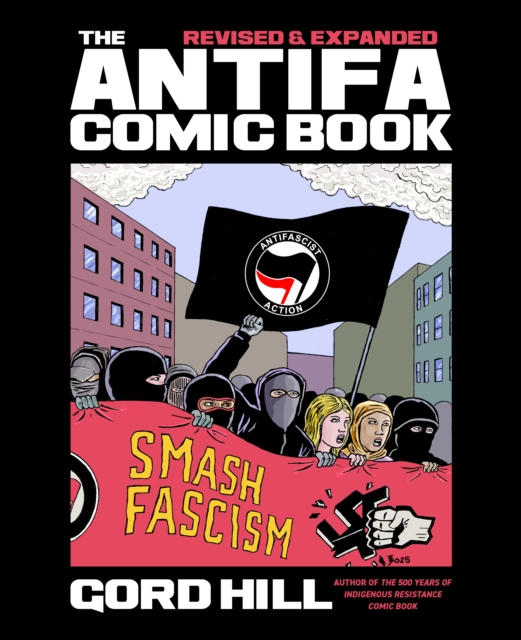
- title
- The Antifa Comic Book : Revised and Expanded
- author
- Hill, Gord
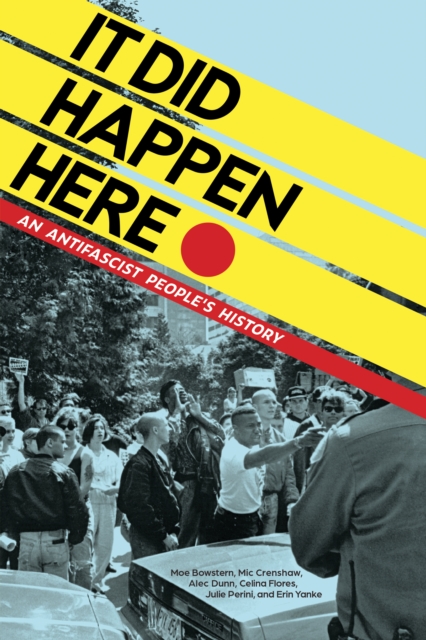
- title
- It Did Happen Here : An Antifascist People's History
- author
- Perini, Julie, Bowstern, Moe, Crenshaw, Mic
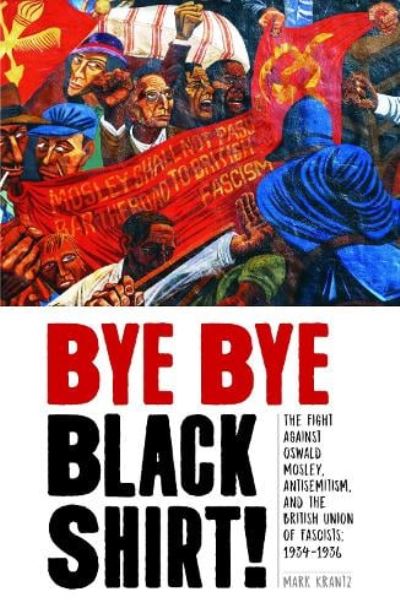
- title
- Bye Bye Blackshirt
- author
- Krantz, Mark

- title
- Fascism and the Global Far Right
- author
- Fuentes, Codera, Maximil
- title
- A Line You Have Traced
- author
- Dunnett, Roisin
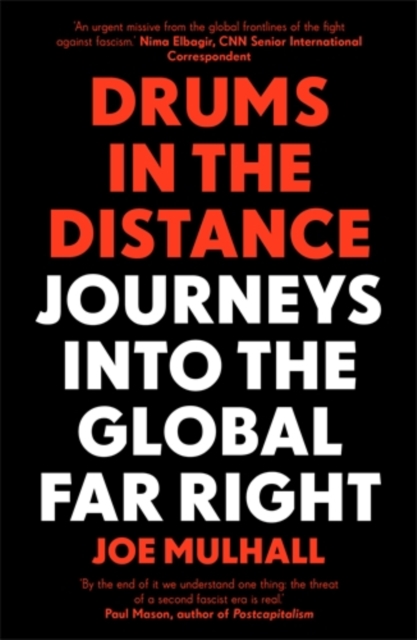
- title
- Drums In The Distance : Journeys Into the Global Far Right
- author
- Mulhall, Joe