


Making a killing: Books on the arms trade chosen by experts
Guest
For our very final event of 2026, on December 3rd, join us for an evening with leading arms trade experts as they expose the people who profit from war and occupation.
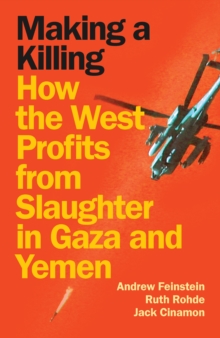
Making a Killing follows the deals, shadowy or brazen, connecting London, Washington, and European capitals to the violence and suffering in Yemen and Gaza.
This book couldn't be more timely, as an ever-growing number of folks become aware of the wealth-flow driving oppression and genocide, and we're deeply honoured to get to host its authors.
Join us in the shop on December 3rd 2026, tickets HERE.
In anticipation of the event, we asked the authors of Making a Killing for the top three books that have influenced each of them in their thinking on the arms trade, and a thought or two on what makes them significant:
Ruth Rohde
Deception in High Places by Nicholas Gilby
A book like no other about the history of bribery in British arms sales - and how the avoidance of accountability shapes our politics to this day.
The Trillion Dollar War Machine by Bill Hartung
A current-day reckoning with the cost of the war machine driving US forever wars from within - and ultimately threatening our very survival.
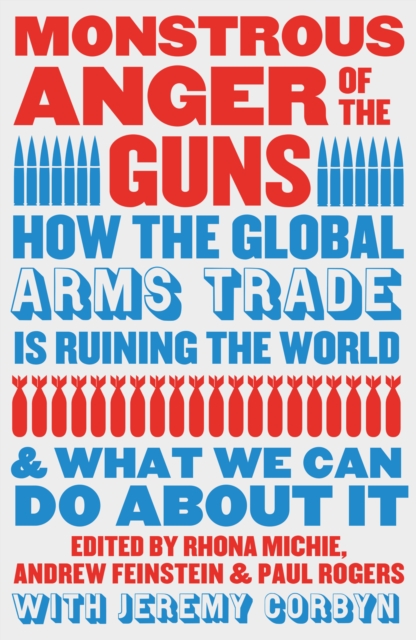
Monstrous Anger of the Guns by Rhona Michie et al.
The key collection of impacts of the arms trade and means ordinary people use to resist it - from militarism and the climate emergency, over the human cost of genocide in Gaza, workers' movements, to demilitarization campaigns in Hawai'i.
Jack Cinamon
The Shadow World by Andrew Feinstein
The OG of arms trade books. I continue to flick through it most weeks and it still manages to shock me. It was the book that first got me interested in researching the shadowy world of the global arms trade.
The Palestine Laboratory by Antony Loewenstein
Exposes how Palestine became a testing ground for Israeli military tech, later sold around the world to more than willing buyers. Sadly, the book has only become more relevant over time.
The Walls Have Eyes by Petra Molnar
Not strictly about the arms trade, but it looks at how tech is used across borders and in the context of migration. A lot of the same developments and profiteering are at play, and it’s terrifying.
Andrew Feinstein
And Weapons For All by William Hartung (not currently in print in the UK)
This is the first of Bill’s brilliant books that I read. It explains US democracy as a system of legalised bribery with arms sales as the fulcrum. It highlights the greed, corruption and corrosion of democracy that characterises the trade in US weapons.
The Merchants of Death by HC Engelbrecht
Published in 1934 this book was in many ways a manifesto for people who believed there should never be another war like WWI. It’s a well researched and passionate attack on war profiteers: those who use government to profit at the expense of other people’s lives and suffering.
Seeing by Jose Saramago
This is a brilliant novel that does more to explain the madness, paranoia & profound violence that is central to fascism and autocracy than most nonfiction books. It speaks to the current moment of hypermilitarism, authoritarianism and mendacious anti-democracy.
Linked Books
- title
- Monstrous Anger of the Guns : How the Global Arms Trade is Ruining the World and What We Can Do About It
- author
- Michie, Rhona

- title
- Deception in High Places : A History of Bribery in Britain's Arms Trade
- author
- Gilby, Nicholas
- title
- The Trillion Dollar War Machine
- author
- Ben Freeman, William B Hartung

- title
- The Shadow World: Inside the Global Arms Trade
- author
- Andrew Feinstein
- title
- Merchants of Death : A Study of the International Armament Industry
- author
- H. C. Engelbrecht

- title
- Seeing
- author
- Jose Saramago

- title
- The Walls Have Eyes : Surviving Migration in the Age of Artificial Intelligence
- author
- Molnar, Petra
- title
- Making a Killing : How the West Profits From Slaughter in Gaza and Yemen
- author
- Andrew Feinstein, Ruth Rohde, Jack Cinamon

- title
- The Palestine Laboratory : How Israel Exports the Technology of Occupation Around the World
- author
- Loewenstein, Antony