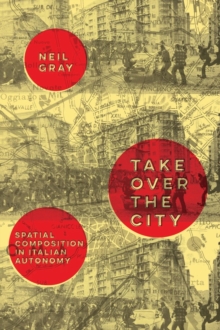


Take Over the City: Neil Gray on Urban Struggle & Italian Autonomy
- Time:
- Thursday, 19 November 2026 : 19:00 - 20:00
- Location:
- Lighthouse Bookshop, 43-45 West Nicolson Street, Edinburgh EH8 9DB
Book Now
In Person Tickets
Getting Event Ticket Data
Online Tickets (How to watch online)
Please Sign in Or Signup to Book Online Tickets
Featured Speakers
Neil Gray & Hamish Kallin
Join us for an evening excavating radical urban history.
Take Over the City provides the first comprehensive spatial analysis of Italian operaismo and the extraordinary urban struggles of 1970s Italy. In it, author Neil Gray argues that these innovative urban struggles carry important lessons for contemporary forms of organization and social conflict in the sphere of social reproduction.
For the Edinburgh launch of Take Over The City, we have Neil Gray in conversation with Hamish Kallin. This should be a fascinating discussion for anyone interested in autonomist praxis more generally, and those interested in radical urban history, contemporary urban struggles and social reproduction.
More about the book:
Drawing on the Marxist urban theory of Henri Lefebvre and others, the book situates the struggles of operaismo, especially in the 1970s, within an incipient-yet-tendential phase of global urbanization. In doing so, the book draws attention to previously neglected urban struggles in the wider social factory, recognizing these as immanent to the new spatial composition of capital in Italy.
These struggles drew attention to, and acted within, a tendency that has only become more entrenched since the 1970s: the centrality of urbanization and real estate to national political economies. If urbanization has become increasingly central for capital accumulation processes, it follows that urban struggle must become increasingly central to anti capitalist struggle. The struggles to ‘Take Over the City’ in 1970s Italy provide an important marker of how this might be done in the current era.
By excavating the urban struggles of 1970s Italy with a spatialized understanding of operaismo’s signature theoretical contribution—class composition—the book provides both an important contribution to radical urban history and a window into how current urban struggles might be theorized. It seeks to both spatialize readings of operaismo through the concept of spatial composition and to radicalize urban theory with Italian autonomist Marxist thought and practice.